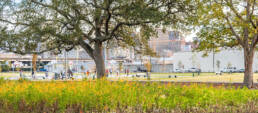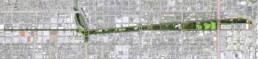
The Lafitte Greenway is a transformative 2.6-mile linear park and multi-modal transportation corridor that reclaimed a vacant, post-industrial rail right-of-way. Connecting five historic neighborhoods from the French Quarter to Mid-City, the project represents a paradigm shift in how New Orleans approaches urban infrastructure. By replacing a “gray” industrial relic with a “green” ecological spine, the Greenway serves as a vital artery for low-carbon transit while simultaneously functioning as a massive decentralized stormwater management system.
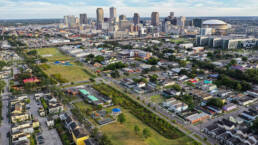
Ecological Performance and Green Infrastructure The technical core of the Greenway is its commitment to ecosystem services. In a city defined by its relationship with water, the project moved away from traditional “pipe and pump” engineering in favor of nature-based solutions. The design features over 30,000 square feet of bioswales and rain gardens designed to capture and filter runoff before it enters the municipal drainage system.
These interventions were paired with extensive soil remediation and the planting of over 500 native trees, which have significantly reduced the urban heat island effect along the corridor. By prioritizing native species, the project restored local biodiversity and created a self-sustaining landscape that requires minimal chemical inputs.
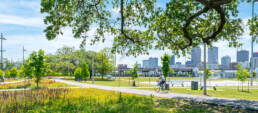
Social Equity and Active Transportation Beyond its ecological functions, the Lafitte Greenway is a study in social resilience. It provides a safe, ADA-accessible route for commuters and residents in historically underserved neighborhoods, promoting health equity and reducing reliance on fossil-fuel-based transportation. The corridor includes a 12-foot-wide asphalt trail for cyclists and pedestrians, accompanied by energy-efficient LED lighting and inclusive public plazas. By reconnecting neighborhoods that were previously severed by industrial decay, the Greenway has fostered social cohesion and spurred equitable economic development along its edges.
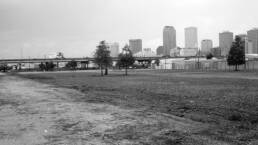
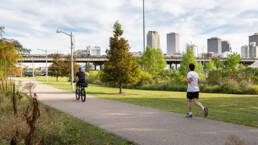
Lafitte Greenway Before & After, New Orleans. Images: Design Workshop
The Lafitte Greenway stands as a benchmark for contemporary urban design, proving that infrastructure can be multi-functional, beautiful, and resilient. It serves as a living laboratory for the “City as a Sponge” philosophy, demonstrating how urban designers can use science-driven policy and technical standards to protect communities while enhancing the quality of life for all residents.