My Contribution & Technical Focus
In this intensive collaborative environment, I focused on the “translation” of Dutch hydraulic principles into the specific regulatory and physical context of New Orleans. My work centered on:
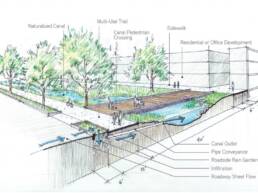
Integrated Water Strategies: Analyzing site-specific conditions to identify opportunities for “blue-green” infrastructure that reduces the burden on the city’s pumping system.
Subsidence Mitigation: Evaluating land-use strategies that utilize groundwater recharge to stabilize soils and prevent further structural sinking in historic neighborhoods.
Policy Synthesis: Contributing to the conceptual frameworks that eventually informed the Greater New Orleans Urban Water Plan, bridging the gap between high-level hydrology and local zoning standards.
Key Outcomes
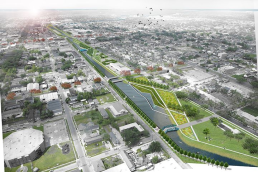
Technical Frameworks: Helped define the site-level interventions (canals, rain gardens, and pervious surfaces) that now serve as the standard for resilient urban design in the Gulf South.
International Knowledge Transfer: Facilitated the exchange of Dutch “Room for the River” concepts into actionable American municipal planning strategies.
Long-term Resilience: The dialogues established the blueprint for the Gentilly Resilience District, the first of its kind in the United States.